If you are planning a van conversion, one of the first questions is usually: how much does van racking cost?
There is no single answer.
A straightforward shelving system for storing tools and materials is very different from a complete mobile workshop with drawers, workbenches, electrical equipment and specialist storage.
Vehicle size, layout, storage requirements and installation can all influence the final van racking cost.
For businesses relying on their vehicles every day, price is also only part of the equation. The right layout should help your team stay organised, access equipment quickly and make better use of the available space.
This guide explains what affects van racking prices and what to consider when budgeting for your next vehicle or fleet.
What Affects Van Racking Cost?
Van racking can range from relatively simple shelving to a highly customised installation.
The main factors affecting the cost include:
- Vehicle make, model and size
- Amount of racking required
- Shelving and drawer configuration
- Storage cases and boxes
- Workbenches and worktops
- Flooring and interior lining
- Electrical systems
- Specialist equipment
- Installation requirements
- Whether the vehicle is part of a larger fleet
Understanding these areas before requesting a quotation will help you create a more realistic specification.
1. Vehicle Size and Available Space
The size of the van will naturally influence the amount of racking that can be installed. A compact van has very different storage requirements to a long-wheelbase, high-roof vehicle used as a mobile workshop. However, bigger does not always mean that every available area should be filled with shelving.
A good design should balance storage with:
- Access through the side and rear doors
- Clear floor space
- Payload
- Safe movement around the vehicle
- Space for larger equipment
- The engineer’s daily workflow
The objective should be to use the available space effectively rather than simply installing as much racking as possible.
2. Shelving, Drawers and Storage Configuration
The type of storage you choose has a significant impact on van racking cost.
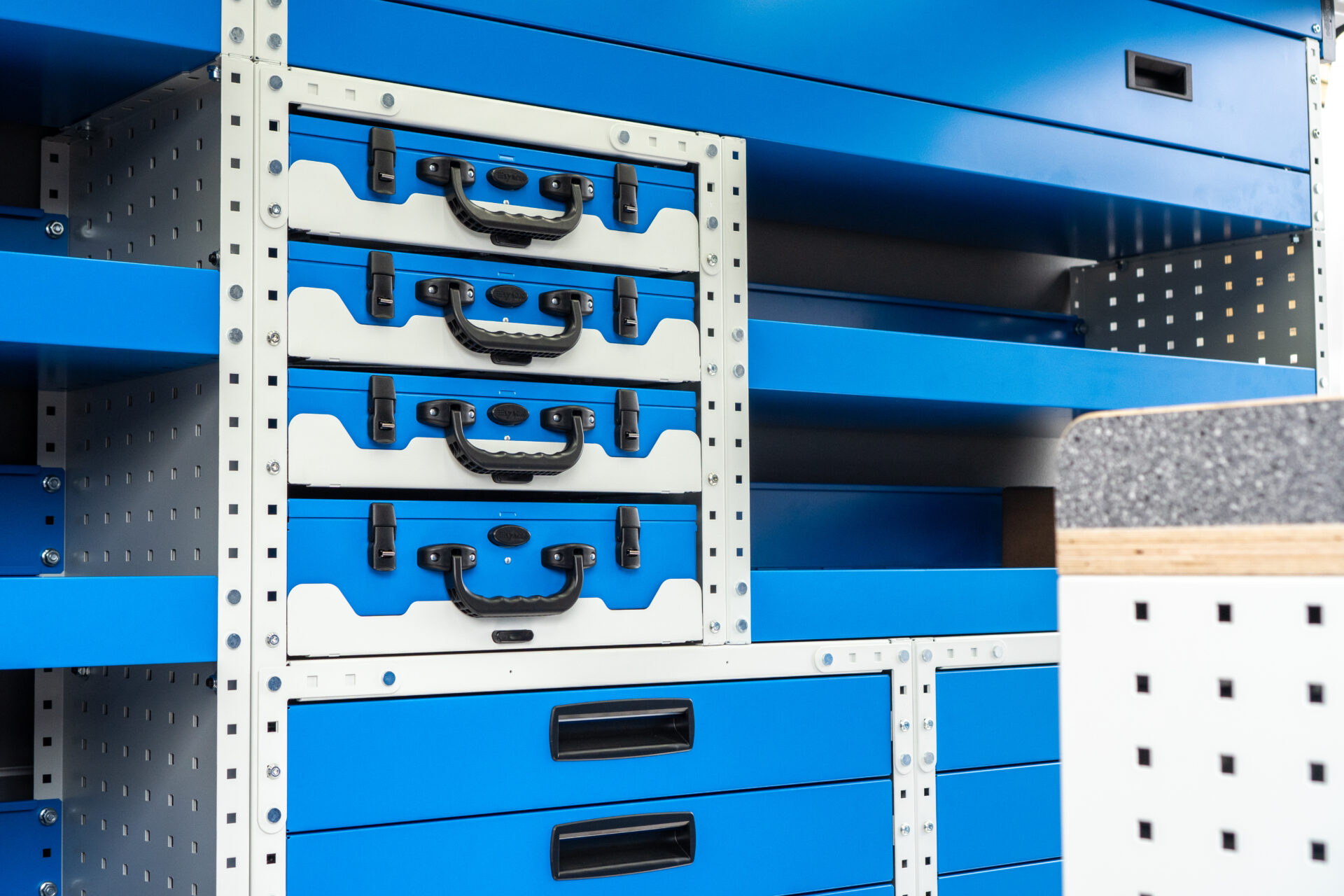
Open shelving is useful for larger stock, boxes and equipment. Drawer systems can provide better organisation for tools, fittings and smaller components.
A complete system might include:
- Adjustable shelves
- Drawers
- Plastic storage boxes
- Service cases
- Lockable compartments
- Workbenches
- Long-item storage
- Top trays
- Tool holders
- Equipment retaining systems
The right combination depends on what your team carries and how frequently each item needs to be accessed. For example, a plumbing and heating vehicle may require extensive parts storage, while a mobile maintenance vehicle could prioritise drawers, a workbench and onboard power. This is why comparing two van racking quotations purely on price can be misleading. The specifications may be completely different.
3. Bespoke Van Racking vs Standard Shelving
There is an important difference between buying shelving that fits inside a van and designing a van around the work being carried out. Standard shelving can be suitable for straightforward requirements.
A bespoke layout goes further.
It considers:
- What equipment is carried
- How often different items are used
- Where engineers access equipment from
- Vehicle payload
- Working space
- Stock organisation
- Future requirements
At Van Racking Solutions, we design layouts around how the vehicle will actually be used. The aim is not simply to fill the van with storage. It is to create a practical mobile workspace.
4. Installation Costs
Another consideration is whether you need a supply-only system or professional installation. A supply-only solution may be suitable for businesses with the facilities and experience to complete their own installation. Professional fitting provides a complete solution and removes the need for your own team to spend time building and installing the system. For fleet operators, professional installation can also help maintain consistency between vehicles. When comparing quotations, always check whether installation is included in the advertised price.
5. Flooring and Interior Lining
Racking is often only one part of a complete van conversion. Depending on the vehicle and its intended use, you may also want to consider flooring and interior lining. A durable floor provides a suitable base for working vehicles while helping protect the original vehicle. Wall lining can also help protect the load area and create a cleaner finished installation. Planning these elements alongside the racking means the entire conversion can be designed as one system rather than adding individual components later.
6. Electrical Systems and Onboard Power
Many modern service vans need far more than storage. For businesses operating equipment away from fixed premises, an integrated electrical system can turn the vehicle into a fully functioning mobile workspace.
Depending on the application, this could include:
- Auxiliary batteries
- Inverters
- DC-DC charging
- 230V sockets
- USB charging
- Internal lighting
- External work lights
- Low-power protection
- Beacons and warning lights
Electrical equipment will increase the overall conversion cost, but it can also significantly expand what your team can do from the vehicle. If you know you will require onboard power, it is worth considering this during the initial racking design. That allows storage and electrical components to be planned together.
7. Specialist Equipment
Some businesses require more specialised installations.
Examples could include:
- Air compressor systems
- Vice and workbench arrangements
- Gas bottle storage
- Ladder storage
- Towbars
- Roof or floor ventilation
- Additional vehicle security
These elements should be included when calculating the total cost of the conversion rather than treating van racking as an isolated purchase. For many businesses, the completed vehicle is effectively a mobile workshop. The relevant question therefore becomes less about the cost of the shelves and more about the cost of creating a vehicle that can perform the required role.
How Much Should You Budget for Van Racking?
It is difficult to provide one useful figure for bespoke van racking because specifications can vary so widely. A simple shelving installation and a fully equipped mobile workshop are fundamentally different projects.
The most effective way to establish an accurate budget is to start with three things:
The vehicle.
What make, model and size are you fitting out?
The equipment.
What tools, stock and machinery need to be carried?
The job.
How will the vehicle actually be used during a normal working day?
Once these are understood, a layout can be designed and accurately quoted.
This is much more useful than choosing a system based on a generic starting price and trying to make it fit your requirements afterwards.
Should You Choose Van Racking Based on Price?
Price will always matter, particularly when several vehicles are involved. However, the cheapest quotation is not automatically the best value.
When comparing van racking systems, consider:
- What components are included?
- Is installation included?
- What storage capacity does the system provide?
- What are the load capacities?
- Can the layout be adapted later?
- How much does the system weigh?
- Is the design tailored to the vehicle?
- What warranty is included?
- Can the same specification be replicated across future vehicles?
The initial van racking cost is only one part of the overall value. A system that helps engineers stay organised and work efficiently could remain in daily use for years.
Van Racking Cost for Fleet Vehicles
The considerations become slightly different when planning several vehicles. Fleet operators often need to balance standardisation with different operational requirements. Where teams carry similar equipment, creating a standard van specification can help maintain consistency across the fleet.
Benefits can include:
- Familiar layouts between vehicles
- Consistent tool and stock locations
- Easier vehicle allocation
- Simpler onboarding
- Easier future vehicle replacements
- A consistent professional standard
There may still be differences between roles. For example, one group of vehicles may require additional electrical equipment while another needs more parts storage. A modular racking system makes it possible to maintain a consistent base specification while adapting individual vehicles where necessary. For businesses planning a larger rollout, agreeing the specification before the first vehicle is converted can help make the process considerably easier.
Is Professional Van Racking Worth It?
For businesses that use service vehicles every day, van racking should be considered part of the vehicle’s working specification rather than simply an accessory.
A professionally designed system can help provide:
Better organisation
Tools, parts and equipment can have dedicated locations rather than being stored wherever space is available.
Faster access to equipment
Frequently used items can be positioned where engineers can reach them easily.
Better use of space
A planned layout can use areas that might otherwise be wasted while maintaining practical working space.
Equipment protection
Secure storage helps reduce movement and damage during everyday use.
A more professional workspace
The van often represents the business when engineers arrive on site. A clean, organised interior helps create a professional working environment.
Long-term flexibility
Modular systems can allow layouts to evolve as requirements change.
The value of van racking therefore goes beyond the physical storage itself.
Planning Your Van Racking
Before asking for a quotation, it is worth spending some time thinking about how the vehicle needs to work.
Consider:
- Which tools are used most frequently?
- What stock needs to be carried?
- Are there large or unusually shaped items?
- Do engineers work from inside the vehicle?
- Is a workbench required?
- Will the vehicle require onboard power?
- Is equipment accessed mainly from the side or rear doors?
- Will more vehicles use the same layout in future?
- Are there payload restrictions to consider?
The more information available at the design stage, the easier it is to create a layout that works properly from day one.
Why Modular Van Racking Can Offer Better Long-Term Value
Business requirements rarely remain exactly the same for the lifetime of a vehicle. Tools change. Stock changes. Engineers change roles. Fleets grow. A modular van racking system provides more flexibility than a completely fixed installation. Individual components can be selected to suit the application, while the overall configuration can be adapted as requirements evolve.
For fleets, modularity can also make it easier to create repeatable specifications across different vehicles. That flexibility is worth considering alongside the initial purchase price.
Getting an Accurate Van Racking Quote
The best way to understand van racking cost is to have a layout designed around your actual requirements.
At Van Racking Solutions, we design bespoke vehicle storage systems for businesses across a wide range of industries. We can incorporate van racking alongside flooring, lining, vehicle security, auto-electrical installations, MIGI compressor generators, towbars and Flettner floor or roof vents to create a complete working vehicle.
Whether you are fitting out one van or planning a larger fleet, the starting point is understanding what the vehicle needs to do.
Get in touch with our team with your vehicle details and an outline of what you need to carry. We can then develop a layout and provide a quotation based on your requirements.
Frequently Asked Questions
How much does it cost to install van racking?
The cost depends on the vehicle, amount of racking required, storage configuration and any additional equipment being installed. A bespoke quotation is the most accurate way to establish the total cost.
Is bespoke van racking more expensive?
A bespoke system can cost more than basic off-the-shelf shelving because the layout is designed around the vehicle and its intended use. However, the additional flexibility, organisation and usability can provide better long-term value for working vehicles.
Can van racking be fitted to any van?
Racking can be designed for most commercial vans, although available space and suitable configurations will vary depending on the make, model, wheelbase and roof height.
Can I install van racking myself?
Supply-only systems can be suitable for businesses capable of completing their own installation. Professional fitting is another option for businesses wanting a complete conversion.
What should I include in a van racking quote request?
Ideally, provide the vehicle make, model, year, wheelbase and roof height together with details of the tools, stock and equipment you need to carry.
Photos of an existing vehicle can also be useful when designing a replacement layout.
Can van racking be standardised across a fleet?
Yes. Creating a standard specification can improve consistency across multiple vehicles while modular components allow individual layouts to be adjusted for different roles where required.
Planning a Van Fit-Out?
Whether you are fitting out a single van or standardising a larger fleet, we can help design a practical layout around your vehicle, equipment and day-to-day requirements.
From van racking and flooring to auto-electrical systems, security, compressor generators, towbars and ventilation, we can build a complete solution around the way your team works.
Send us your vehicle details and an outline of what you need to carry, and we can create a bespoke layout and quotation.